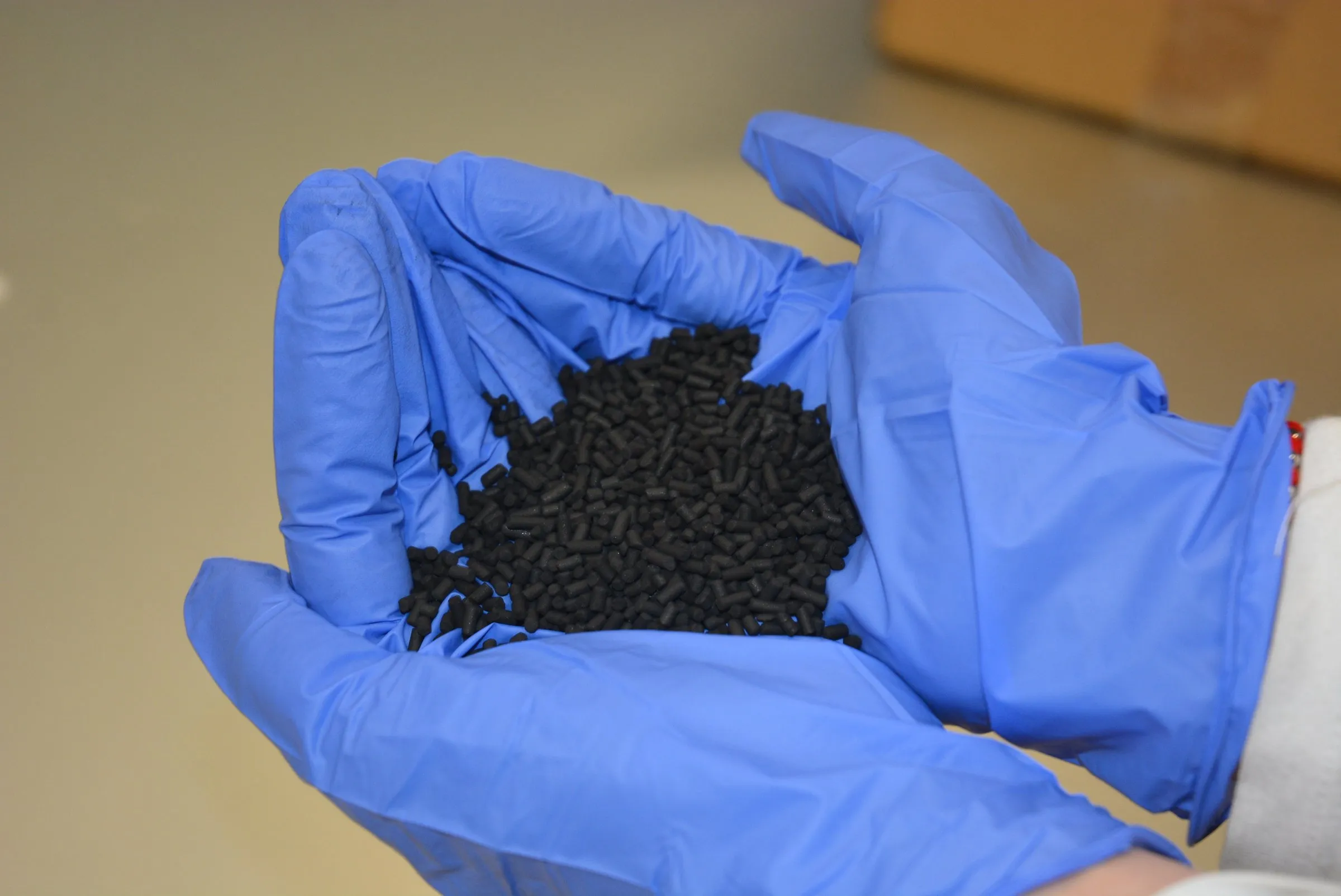
Gloved hands holding a pile of black adsorbent pellets

Panoramix

12 members

The chemistry team, searching for the best CO₂ adsorbents.

Panoramix brings together students from chemistry, materials science and environmental science, from early bachelor to PhD level.

The team works with our partner labs on everything from simulations and process modelling to the search for the ideal adsorbent: high CO₂ capacity and selectivity, but also thermal stability, moisture tolerance and a low regeneration cost.

  1. Replace our current adsorbents with new, better-performing materials.
  2. Work with Astérix on the new prototype, testing adsorbents in its test module.
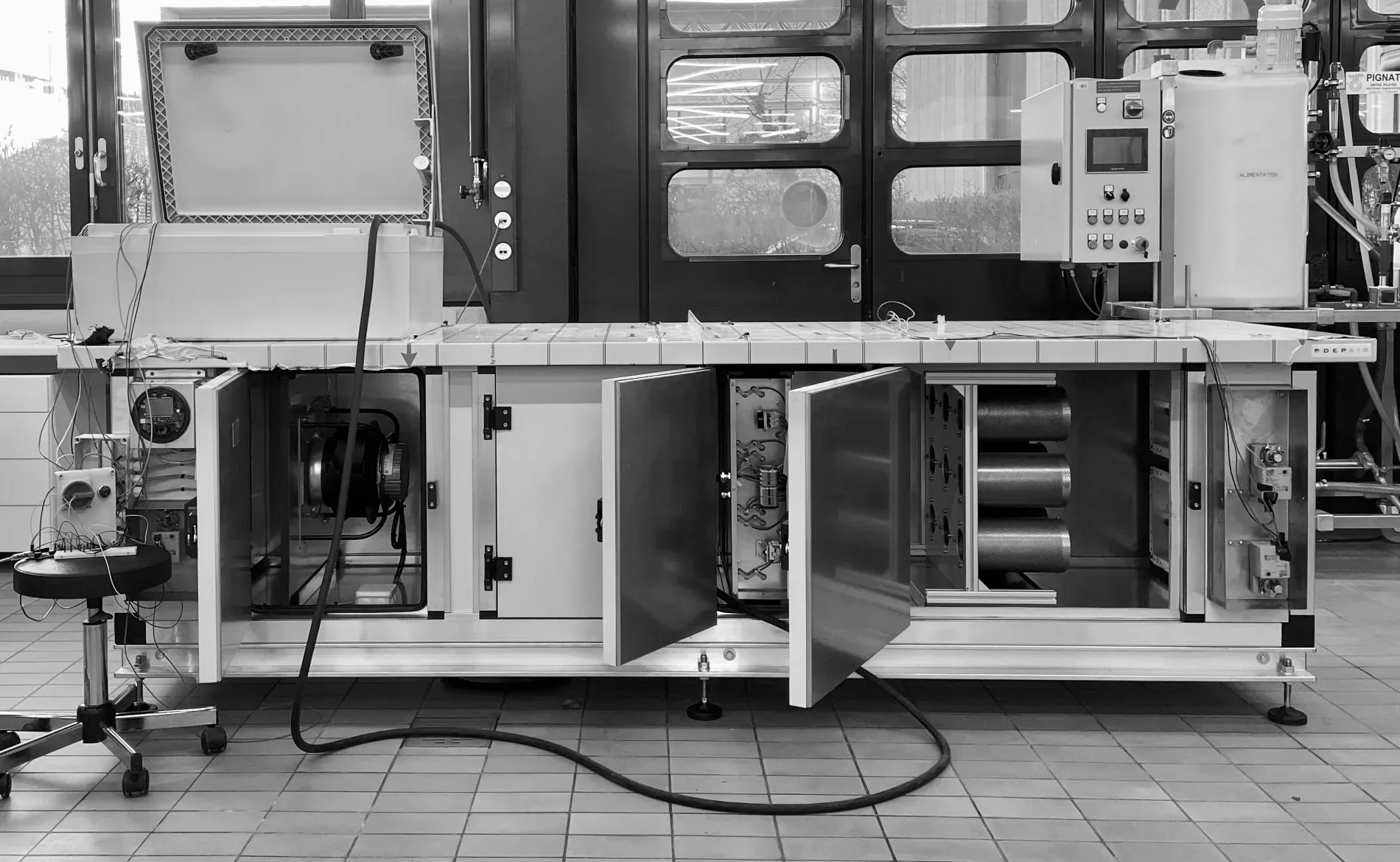
The Astérix prototype with its panels open, showing the adsorbent beds

Astérix

8 members

The first module, capturing CO₂ directly from the air.

Astérix is the first stage of our direct air capture process. Its adsorbents trap CO₂ from ambient air and release it when heated, raising the concentration from about 400 ppm to around 1%.

The team works on the machine’s performance and on the control code that runs it.

  1. Build a test module for Panoramix to find the best adsorbents and the optimal adsorption and desorption conditions (temperature, pressure): components ready by December 2026, module running by February 2027.
  2. Build a new prototype based on these results: construction from May 2027, assembled by June 2027.
  3. Connect this prototype to Idéfix in September 2027.
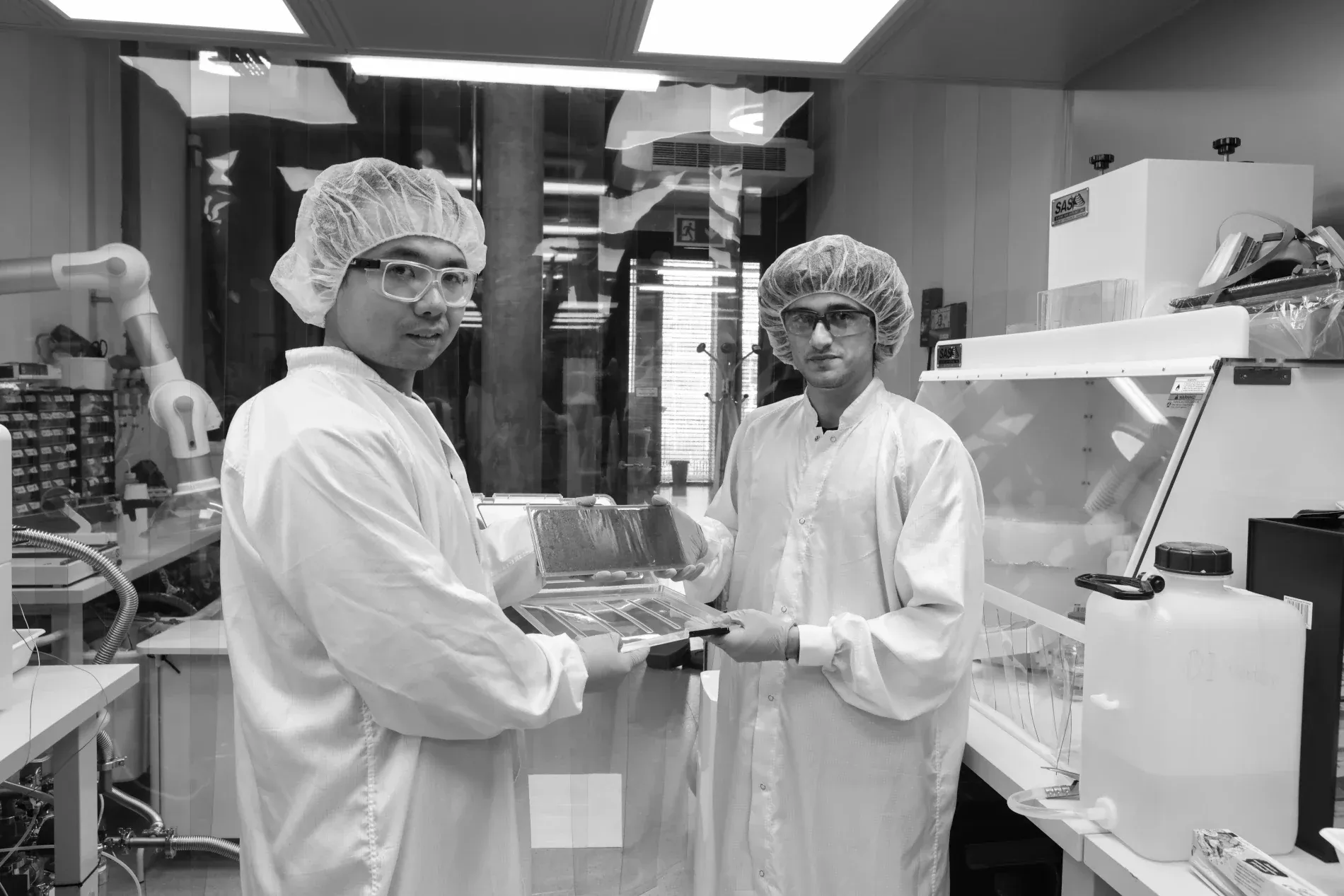
Two students in clean-room suits handling membrane samples in a lab

Idéfix

5 members

The second module, separating CO₂ with graphene membranes.

Idéfix uses graphene membranes only one atom thick, which filter the gas molecule by molecule and bring CO₂ purity up to 90%.

The module is designed to work on its own too: it can be installed directly at a factory outlet. The team works on the module’s electronics and fluid dynamics.

  1. Implement and test a new silica membrane, with a 10% first-phase CO₂ yield.
  2. Add a Raspberry Pi as the system interface for sensors and data collection.
  3. Redesign the chassis for better modularity and mobility.
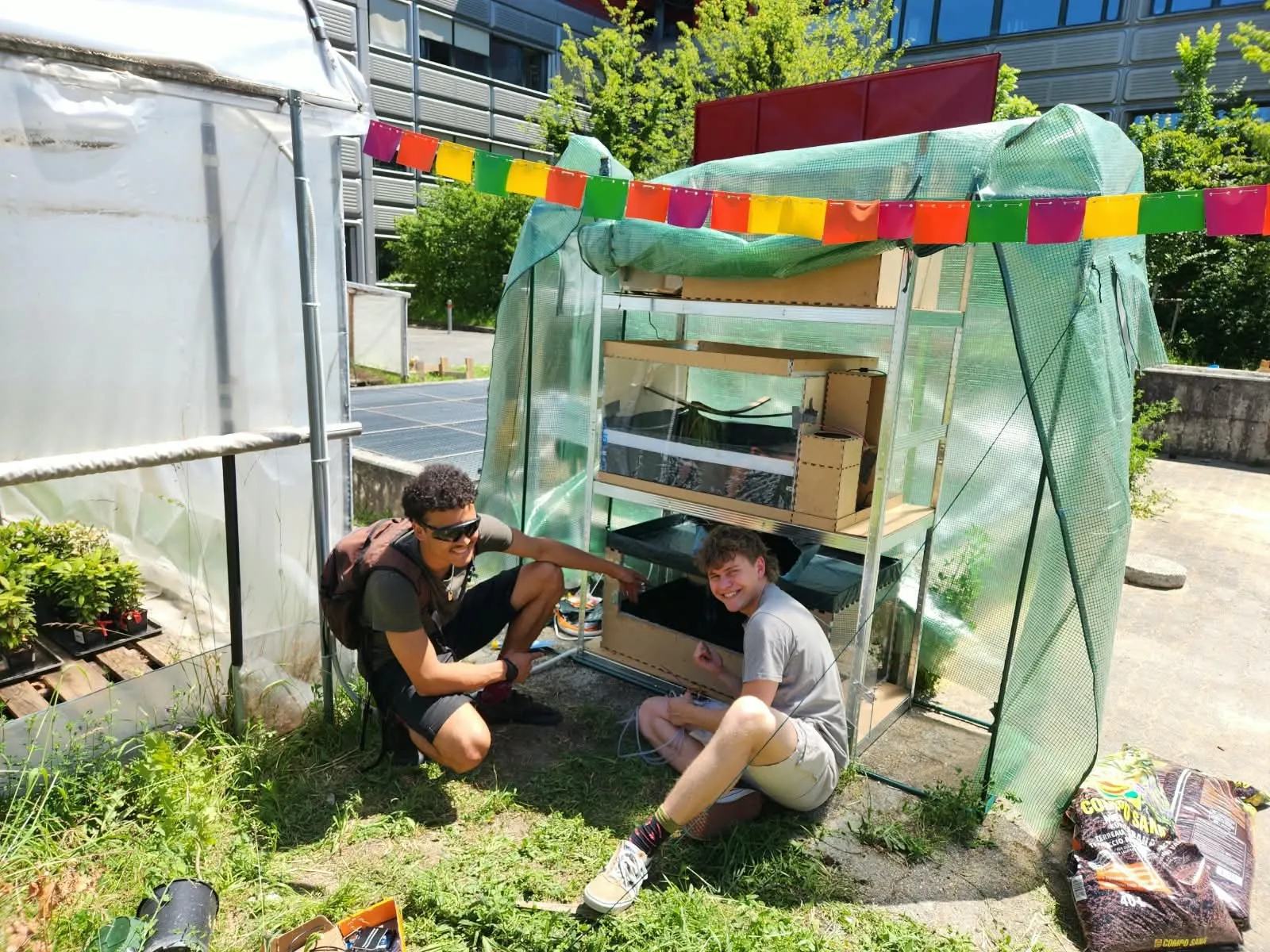
Two Carbon Team members smiling while building a prototype inside a small greenhouse on campus

Didactix

5 members

Our learning programme, where newcomers learn by building.

Didactix is the Carbon Team’s learning programme. No prior experience is needed: members learn prototyping hands-on alongside the technical teams.

  1. Design from scratch a small CO₂ detector that measures and displays the CO₂ concentration in the air.
  2. Make it show clearly when CO₂ reaches harmful levels: a small water tank that bubbles and lights up red (inspired by Birdie).
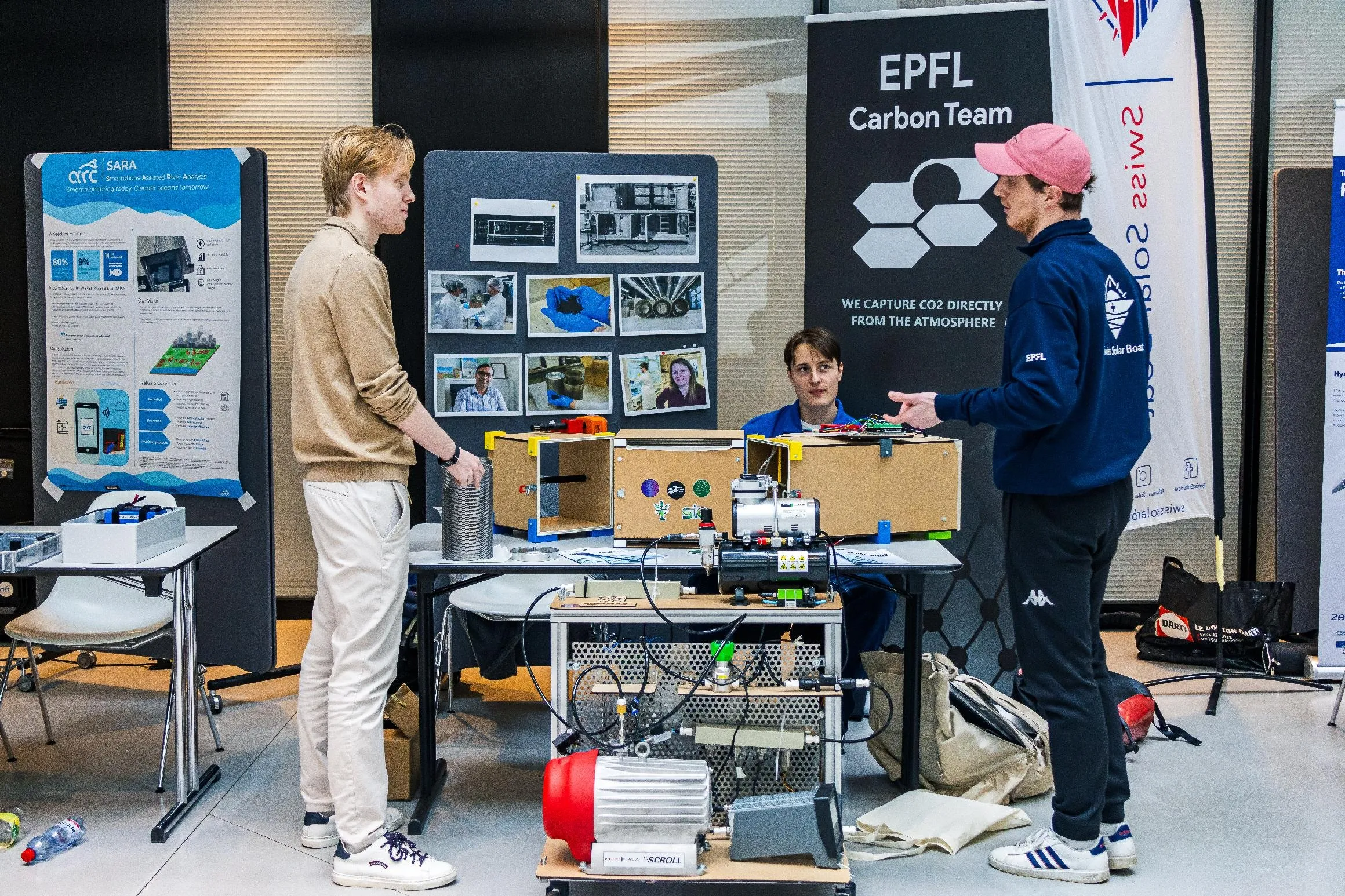
Carbon Team members presenting the prototype to visitors at a stand

Sustainability & Communication

7 members

Assessing the real impact of DAC and sharing our work.

Sustainability assesses the environmental impact of our prototypes through Life Cycle Assessment (LCA), including maintenance, recycling and lifespan.

Communication runs our LinkedIn, Instagram and website, and organises events to share our progress, raise awareness and connect with partners.

  1. Study the broader environmental and societal implications of DAC: rebound effects, resource consumption and large-scale deployment.
  2. Share this knowledge within the Carbon Team and identify where DAC is genuinely beneficial and economically relevant.
  3. Increase the team's visibility, communicate its mission and strengthen its network.
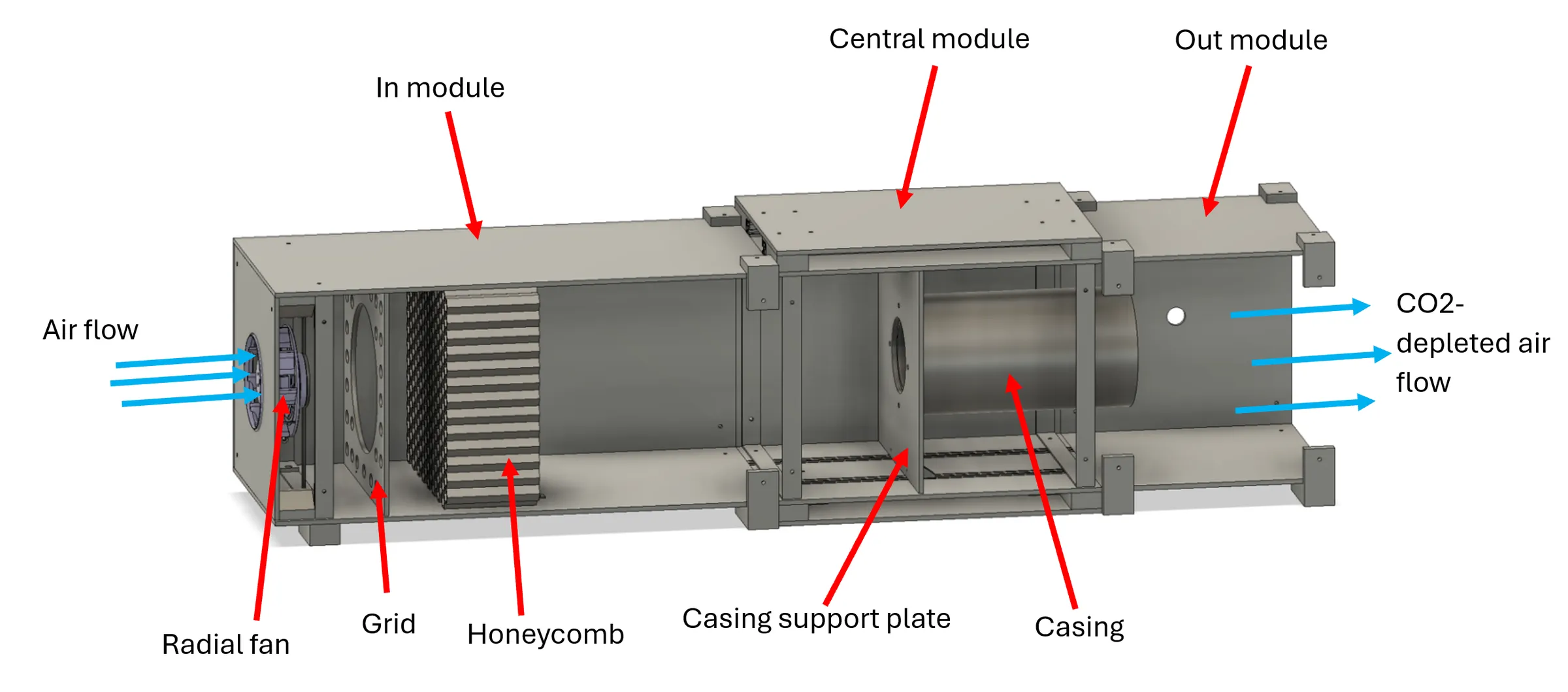
Computer model of the air-flow module, showing fan, grid, honeycomb and casing

Pneumatix

Paused this year

The link between Astérix and Idéfix.

Pneumatix connects our two modules: it adapts the CO₂-enriched flow leaving Astérix so that it matches what Idéfix needs.

The team is paused this year.